
Today, some people claim that faith means ignoring reason. They treat it like a blind jump into the dark. They also assume that smart people can’t believe in God.
But that view of “blind faith” is mistaken. It doesn’t match history, philosophy, or how Christians actually think. Real faith invites questions. It challenges us to look at the evidence for God, not avoid it.
Scientists use evidence to form theories. Jurors use facts to reach verdicts. Believing in God works in a similar way. It’s not about shutting your eyes. It’s about seeing the world clearly and noticing how designed and meaningful it is.
The Philosophical Foundation: Connecting Reason to Reality
If faith isn’t blind, what is it looking at? To answer that, we need to look at the clues God may have left in our universe. There are many pieces of evidence that point toward God, but let’s explore three of them.
The Cosmological Argument

The Cosmological Argument explains the existence of the universe. All things that exist must have a cause. Things don’t just randomly pop into existence out of nothing.
So if the universe is an effect, something had to cause it. That cause would need to exist outside of time, space, and matter. Believing in a creator isn’t guesswork. It’s a logical conclusion from the fact that the “Big Bang” needed a “Banger.”
The Fine-Tuning of the Universe

The fine-tuning of the universe theory (The Teleological Argument) seeks to explain the fact that the universe can’t just be randomly cohesive. If you stumbled across any man-made device or contraption, you can understand why it’s easy to recognize it wasn’t just a random occurrence. Why is the logic any different for all things that exist and function properly?
This is one of the most powerful clues. Modern physics shows that the laws of nature — like gravity, electromagnetism, and the speed of the universe’s expansion — are incredibly precise. If these values were even slightly different, stars couldn’t form, atoms wouldn’t hold together, and life couldn’t exist.
The Moral Argument

One of my personal favorites, The Moral Argument makes the case that good and evil are terms that would not exist or would cease to have meaning without a definitive source of reason.
While different cultures might have different ideas of right and wrong, the vast majority of civilization inherently understands what is good and decent and what is abhorrent and evil.
If humans are just biological accidents, morality would be nothing more than personal preference or survival instincts. Yet we live as if real right and wrong actually exist. That points to a moral “Lawgiver” whose standards go beyond our opinions.
Key Takeaway
These aren’t just religious stories. They’re observations about our world. When you look at the universe’s beginning, its fine-tuning, and our sense of morality, belief in a creator doesn’t seem like a long leap of faith. In fact, it can take more faith to believe that everything came from nothing and life happened by pure accident.
The Historical Perspective: Trusting the Record
Some people argue that even if a Creator exists, we could never know anything about Him. But faith often relies on testimony and written records. That’s the same way we study any major historical event, from ancient kings to famous battles.
The Reliability of the Sources

Christian beliefs aren’t based on fairy tales and mythology. These aren’t made-up bedtime stories with which to tuck in our kids at night.
Christianity is based on historical facts. These are actual people, places and times that were recorded and passed on from generation to generation.
When historians examine these documents using normal standards — like how many copies survive and how close the writings are to the events — they rank among the best-attested works from the ancient world.
The Bible Invites Investigation
The Bible doesn’t tell us to take blind leaps. Conversely, it gives plenty of evidence and instruction and invites us to test and question what we know and believe.
Paul wrote, “Test all things; hold fast what is good.” (1 Thessalonians 5:21) The Bereans in Acts 17:10-12 checked the Scriptures every day to see if Paul’s claims were true. Even Thomas was invited to touch Jesus’ wounds.
Christianity has a history of open inquiry, not forced silence.
Faith as Informed Trust

We often put religious faith up on a pedestal as some greater act of blind and unsubstantiated belief. But in reality, it is informed belief, not much different than our every day faith.
What are some examples of every day faith?
- The Pilot: You board a plane without knowing the pilot personally.
- The Surgeon: You go under anesthesia trusting the hospital and the doctor’s training.
- Friendships: You trust others based on their past character.
- Your Automobile: You expect your car to work as intended and not fall apart or malfunction on the way to your destination.
In each situation, you make a rational decision based on evidence and a track record. Believing in God works the same way. It’s informed trust, not blind guesswork.
Key Takeaway
History is not just a collection of baseless, random stories. These are actual events featuring real people. And when you see the power and strength of the written documents and the dramatic effect on the lives of early Christians, you see faith grounded in truth and fact, not imagination.
The Role of Personal Experience: The “Evidence of Life”
Some skeptics say personal experience doesn’t count as evidence.
It’s true that feelings and emotions can be fickle. But long-term, life-transforming experiences act as a kind of “subjective data.”
Because God is real, it makes sense that He would intersperse signs of Himself throughout the universe, as well as in all of our lives’ stories.
The Power of a Changed Life

There are few more powerful testaments to God’s existence and fuel for faith in Him than a changed life.
Whether it be freedom from the shackles of an addiction, to a radically changed heart, or to dramatically altered priorities, it comes as no surprise that the biggest cause of these changed lives is a burgeoning relationship with God.
That’s an effect that needs a cause.
Answered Prayer and “Coincidence”
Ask any Christian and most will tell of a time that either they, or someone close to them, experienced life-altering moments that seemed too good to be true and also too fitting to be coincidental.
Sometimes this could be a new job, a pay raise, a clean bill of health, a badly-needed resource, or perhaps when a new friend or acquaintance enters their life at exactly the right time.
Skeptics will scoff and dismiss these moments as coincidences. But believers can see a pattern and an answer to their prayers.
The Human Longing for Something More
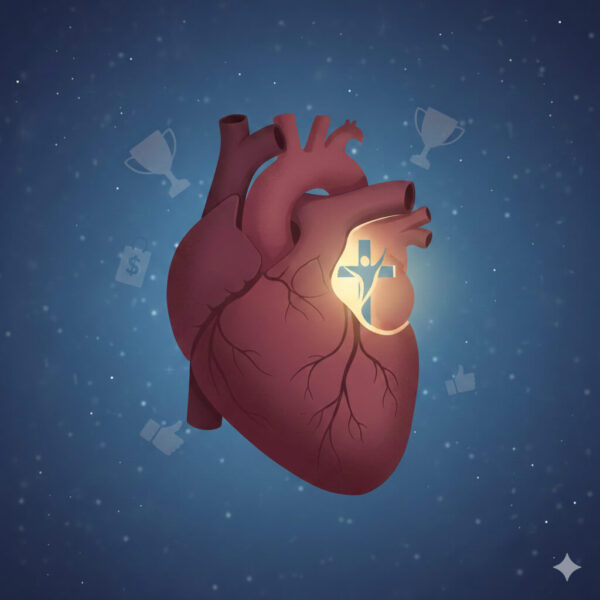
C.S. Lewis argued that our desires usually match something real. Hunger points to food. Thirst points to water.
In the same way, our desire for meaning, purpose, and connection points to something bigger, better, and more profound than the simplicities of life.
We often speak of a “God-shaped hole” in the human heart that only one thing — one being — can fill.
This is not just wishful thinking, but an observation of the human condition.
Key Takeaway
Personal experience may not count as proof in a lab, but it matters to the person who lives it. It’s where the arguments for God meet real life and become personal.
Addressing the “Leap”: Where Reason Meets Trust

Even with the strong empirical evidence that we’ve discussed so far, there inevitably will be unexplainable phenomena that require us to bridge the gap with some form of faith.
After all, if God is who we say He is, then not even atheists could dispute the fact that He’d have to be inordinately more knowledgeable than we are. We’re smart enough to know that we don’t have all the answers.
Skeptics might call this bridge a “leap of faith.” But there is a big difference between jumping into the dark and stepping into the light.
The Scientific Parallel
To reach the skeptics, sometimes you have to speak their language. Which means: science, science, science.
Be aware that scientists work like this all the time. In order to arrive at conclusions, they must collect as much data as they can, recognize patterns, and then form a hypothesis — or “best guess” — to explain what they’ve observed.
Often, they may not have absolute proof but the facts are quite convincing in answering the questions at hand.
It’s similar in court cases, where very often crimes are committed without direct visual evidence. And yet, that doesn’t stop a judge or jury from delivering a guilty verdict based on a preponderance of evidence.
The Relationship Analogy

Relationships often have the same dynamic.
Let’s say you’re getting married and want to make sure you are with the right person. While courting them for a long period of time, you find out everything you can about them. You talk to their friends and family and see how they react to various real-life experiences.
You think you know them inside and out but can you ever really be sure you know them 100%?
Ask anybody who’s ever had a major, often unpleasant surprise occur in their marriage and they’ll tell you such an experience came out of nowhere.
However, that doesn’t stop us from getting married, does it? We still take that step of faith don’t we?
But there’s a difference:
- Blind Faith: Marrying a stranger you’ve never met.
- Informed Faith: Marrying someone whose character has already been proven.
Faith as Stepping Into the Light

Faith is not walking into an unknown, pitch-black room with the hopes you don’t slam into a wall or stub your toe. It’s walking through that doorway and feeling around for a light switch that you’re sure is there because you’re informed and educated about the ways of a room.
Faith is like getting into a car that was put together with logic and reason. You know that the car was built with intelligence, solid materials, and repetitive, time-tested experience. Faith is simply getting behind the wheel and trusting what you know to be true.
Key Takeaway
The so-called “leap of faith” that skeptics want to thrust upon Christians isn’t actually a leap at all. It’s really just walking with confidence and trust based on the facts and evidence that point to a logical conclusion.
I think about a scene from Indiana Jones and the Last Crusade when Harrison Ford’s character is trying to pass through the Temple of the Sun in pursuit of the Holy Grail. There are three challenges he must overcome to get to the room where the Grail is stored — The Breath of God, The Word of God, and The Path of God.
The last one, The Path of God, has Indiana facing what looks like a huge leap across a canyon. In real life, a skeptic would look at that situation and think that a Christian would try to leap across that chasm, not knowing if they’ll make it but just blindly hoping for a miracle.
But also in reality, a Christian — just as Indiana did in the movie — trusts that there will be a path laid forward for him. Indiana didn’t try to leap at all, but instead walked with faith and got to his destination safely. The invisible path was made visible after all.
Conclusion: A Faith That Thinks
Stop me if you’ve heard this one before: “faith and reason are at odds,” so says the skeptic.
But that couldn’t be further from the truth if you know how to explain it.
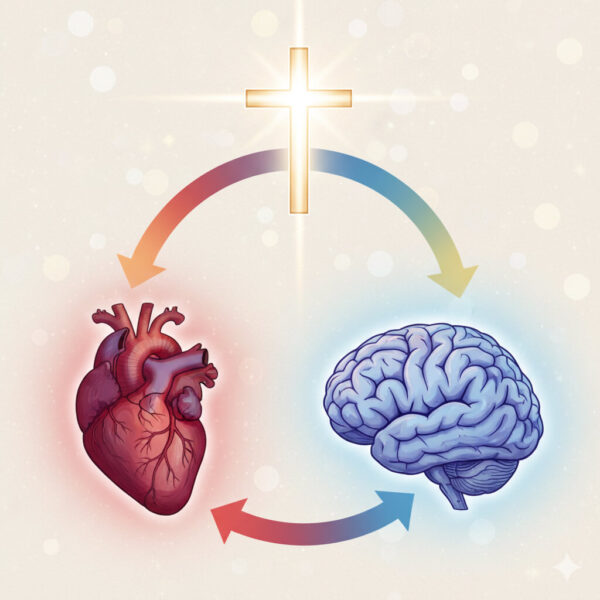
Blind faith is a leap into the dark. Informed faith is a step into the light. It’s based on evidence from the universe, from history, and from changed lives.
Believing in God doesn’t mean you stop studying, asking questions, or seeking answers. On the contrary, it means asking the bigger questions and finding the deeper meanings.
This world is full of greed, shallowness, and self-absorption. To think that this is all there is would be to subscribe to random, meaningless events that ultimately leave us unfulfilled and yearning for something more.
But to those who have discovered the evidence, they wish to follow it to see where it leads.
Faith isn’t the end of thinking. It’s the start of a deeper search for the “why” behind everything.
