
Does God exist? How can you be sure of his existence? What are some compelling arguments for the existence of God?
These are just a few of the routine questions that humanity has had to grapple with throughout its existence.
If you are a Christian apologist, what would you say to someone who doubts that God is real because they need to see actual evidence of His existence?
In this post, I’m going to briefly examine some of the most common arguments that make the case for God’s existence and that offer proof that He is real.
The Cosmological Argument (First Cause Argument)
The Cosmological Argument, in its simplest terms, is the claim that everything that begins to exist must have a cause.
We know that the universe began to exist at some point. Even atheists will acknowledge this fact — although at some point in the past there were some who wanted to claim the universe always existed.
As an aside, if there were an infinite number of days in the past, we would never have gotten to today. That’s how we know there had to be a first day and a limited number of days in the past.
Therefore, if we use the argument that all things that begin to exist had to have a cause, then the universe must have had a cause since it began to exist at some point in the past.

Atheists will claim The Big Bang Theory, followed by millions of years of evolution, caused everything to exist as we now know them. But that would necessitate something to have caused the Big Bang. You can’t get something from nothing; no one has ever been able to reproduce that.
You can’t just hold out your empty hand and say, “Gimme a ham sandwich,” and expect one to appear. Something would have to cause the sandwich to appear.
The most logical conclusion for the beginning of the existence of the universe is that a Creator created it, a being that can “cause” it to begin to exist.
The Teleological Argument (Design Argument)
The Teleological Argument for God’s existence focuses on design and purpose.
When examining the many wonders of the universe and how intricately fine-tuned everything appears to be, the most plausible explanation is intelligent design.
Taking this a step further, if there is a design to something, it implies it was done by a designer.
Scientific discoveries throughout human existence have pointed to reasons to believe a Creator is behind it all.
Some of those discoveries include gravity, the expansion speed of the universe, and the size and the distance of Earth from the sun. The precise nature and consistency of each of these is far too intricate to believe they are all random.
There are, of course, others. But from a design standpoint, if any of these constants were tweaked, scientists resoundingly agree that life would cease to exist as the universe would be unable to sustain itself.

DNA is one of the other strong pieces of evidence for a Designer. The amount of information that is found packed within the DNA of various organisms has to come from an intelligent mind. Information, that which conveys a message, can’t be possible without a source of that information.
In other words, you can’t randomly get a message out of nothing. It’s illogical. A message must come from a messenger. Information and instruction must come from a source capable of creating it.
The Moral Argument

The Moral Argument for God’s existence claims that there are objective moral values, and if something is objective, it must have an absolute standard of truth.
This is one of my favorite arguments for the existence of God, and my go-to position if ever asked to “give a defense” for the faith and hope I have, because it seems so logical.
In order to label something as “evil,” there must be a standard of good. If we see an action, we must have a frame of reference in order to say, “that action was good” or “that action was bad.”
But who sets that standard of good?
This is where moral relativists will step in and say that each country, or each culture, or each society will determine that by consensus.
But wait, are you saying that’s done by voting? Do these societies get together and vote on morality?
If that’s the case, then you will have drastic swings on morality such as the abortion issue.
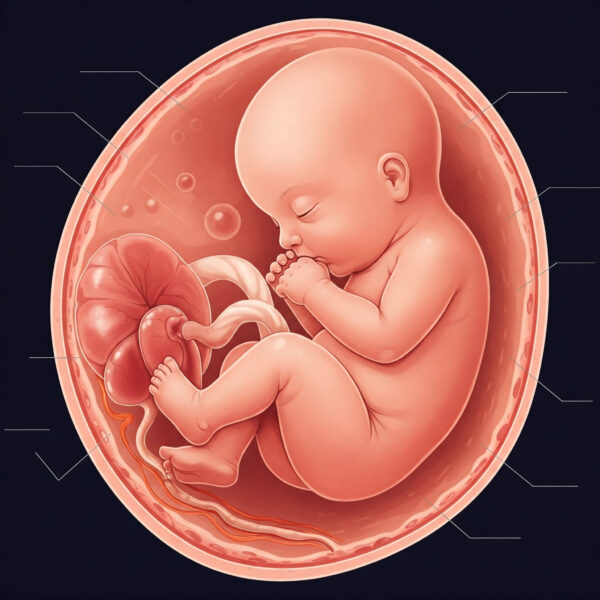
For thousands of years, it was unethical and evil to kill babies in the womb. Then, in 1973, by some inexplicable decision from the United States Supreme Court, abortion became legal. So, I guess because the U.S. deemed it “legal,” apparently it was no longer “evil,” right?
But then in 2022, the Supreme Court overturned Roe v. Wade — the 1973 decision that legalized abortion — which means that the country now saw abortion as evil again, right?
No, of course not. You can see how that kind of volatility in a society’s laws to try to regulate morality can be absurd and illogical.
Morality must be timeless. It must be permanent. It must not waver based on the whims and fickle feelings of an individual or of a society.
The only logical source of an absolute right and wrong is a Creator not bound by such rules.
The Ontological Argument
The Ontological Argument for the existence of God is one rooted in logic rather than observation. It relies on reason over physical evidence.
Admittedly, it’s one of the more difficult arguments with which to be persuasive. If you can understand the underlying principles, though, you can see how the argument holds merit.

Saint Anselm of Canterbury proposed this in 1078. He described God as the greatest being that can be conceived. Which makes sense so far, right? If God creates everything, it’s impossible to imagine a greater, more powerful being.
He argues that such a being must exist in the mind, even in those who deny the existence of God. So, to elaborate, an atheist understands the concept of an all-knowing, all-powerful God; he just chooses to deny such a being exists.
So far, so good?
Anselm pushes further: if the greatest possible being exists in the mind, it must exist in reality.
But why? Because a being that does not exist in reality is not really the greatest being, is it?
How so?
A being that exists in the mind only is not greater than one that has the attribute of existence, too.
Nothing can be greater than a being than whom no greater being can be conceived.
Does that — hopefully — make sense? If God did exist, even if an atheist refuses to believe it, it would be the greatest being possible by pure definition, right?
And as the greatest being, He must exist both in the mind and in reality, otherwise some other greater being would exist by nature of its existence in both reality and mind.
The Contingency Argument

The Contingency Argument for God’s existence focuses on the dependency of things on something else, or the necessity of those things’ existence.
All things that exist either exist out of necessity, or because of an external cause.
Contingent things are dependent on something else for their existence; they could either exist or not exist.
A necessary being, conversely, exists by its own nature and can’t not exist.
The universe and everything within it are contingent. They rely on other things for their existence. To explain the existence of contingent things, there must be a necessary being that is not contingent on anything else.
This necessary being is the ultimate explanation for the existence of the universe.
That necessary being is God. What else could exist out of necessity and not be contingent on anything else?
Conclusion
There is an abundance of evidence for God’s existence. An atheist will dispute every bit of it, tooth and nail. But when you piece it all together, it’s hard to dispute that the evidence for a Creator provides the most logical explanation for why things are the way they are.
Using a number of arguments that have been outlined in this post, you can help put a pebble in someone’s shoe. You might not change their mind right away, as changing someone’s worldview doesn’t happen in one conversation. But that pebble will get them thinking and hopefully come back for more information.
Using the Cosmological, Teleological, Ontological, Contingency, and — my personal favorite — Moral Argument can help make a convincing case to the unbeliever. You should never expect to change hearts and minds right away, as that could leave you feeling overwhelmed and discouraged.
Instead, look at it as a chance to plant seeds. You are gardening; someone else might be called to harvest. And the Holy Spirit will play its role, too, as the agent that changes the hearts and minds of unbelievers.
