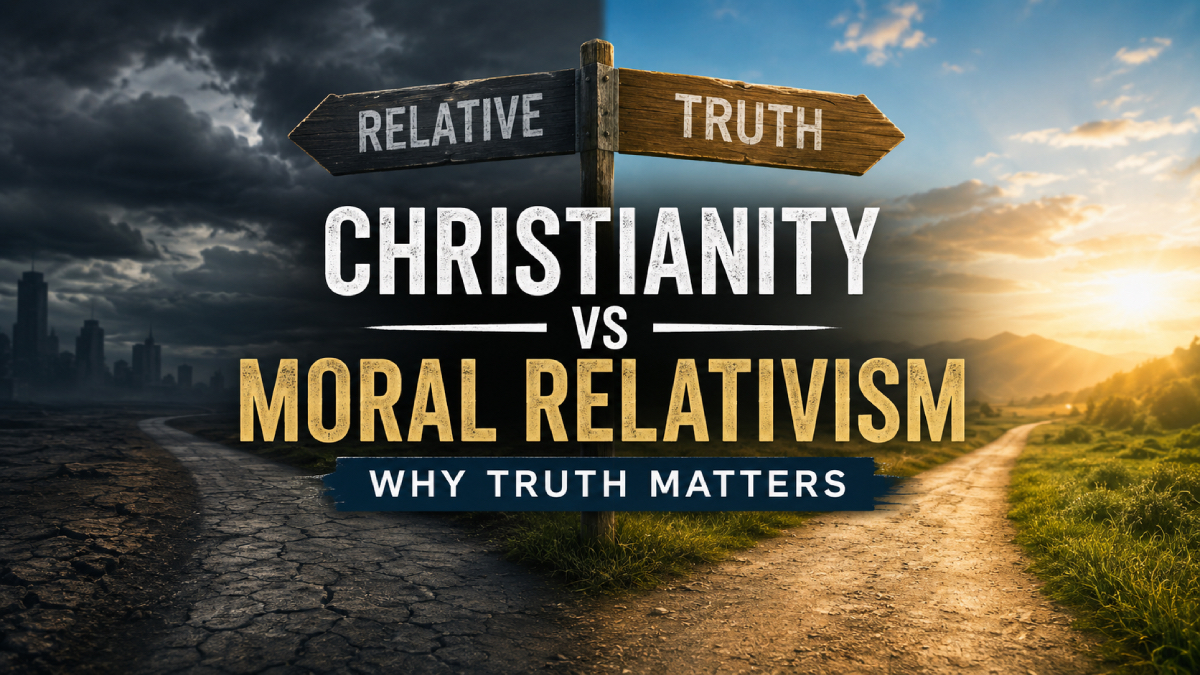
Christianity teaches that truth is objective, not relative. While moral relativism claims that right and wrong depend on personal opinions, cultures, or circumstances, Christianity argues that moral truth is grounded in God’s unchanging character.
If morality is merely relative, it becomes difficult to explain why actions like murder, slavery, or genocide are objectively wrong. Christianity offers a foundation for moral truth that applies to all people, in all places, at all times.
Why Christianity vs Moral Relativism Is One of the Most Important Questions Today
Many people today believe that morality is personal. Phrases like “live your truth,” “who am I to judge?” and “what’s right for you may not be right for me” reflect a worldview known as moral relativism.
Moral relativism teaches that there are no universal moral standards. Instead, morality is determined by individuals, societies, or cultures. What is considered right in one place may be wrong in another, and neither view is considered objectively correct.
Christianity challenges this idea. The Bible teaches that truth exists independently of human opinions and that God provides an objective standard for morality.
The debate between Christianity vs Moral Relativism is not merely philosophical. It affects how we think about justice, human rights, relationships, law, and the meaning of good and evil.
What Is Moral Relativism?
Moral relativism is the belief that moral values are not universally true.
According to this view:
- There is no objective standard of right and wrong.
- Moral beliefs are created by people or cultures.
- No moral system can claim to be universally correct.
- Tolerance becomes the highest virtue.
At first glance, moral relativism may appear attractive because it promotes acceptance and avoids conflict. However, it creates significant problems when applied consistently.
For example:
- Was slavery objectively wrong?
- Was the Holocaust objectively evil?
- Is human trafficking wrong regardless of culture?
Most people instinctively answer “yes” to these questions. Yet moral relativism struggles to justify those answers because it denies universal moral standards.
Why Christianity Affirms Objective Moral Truth
Christianity teaches that morality is rooted in God Himself.
God does not invent morality arbitrarily. Rather, His character defines what is good. Because God is loving, just, holy, and truthful, moral truth reflects those attributes.
Scripture consistently presents moral standards as objective realities:
- Murder is wrong.
- Theft is wrong.
- Honesty is good.
- Justice matters.
- Human beings possess inherent value.
These truths do not change based on popular opinion or cultural trends.
If God exists, then objective morality has a foundation. Moral laws flow from the moral Lawgiver.
The Problem with Moral Relativism
While moral relativism sounds tolerant, it often contradicts itself.
1. It Cannot Condemn Real Evil
If morality is relative, then actions are only wrong according to personal or cultural preferences.
But most people believe some acts are truly evil regardless of culture or opinion. We condemn genocide, abuse, and exploitation because we recognize that certain actions violate objective moral standards.
2. It Undermines Human Rights
Human rights assume that all people possess equal worth.
But if morality is merely a social construct, rights become cultural preferences rather than universal truths. A society could redefine rights at any time.
Christianity provides a stronger foundation by teaching that every person is created in the image of God.
3. It Becomes Self-Defeating
Many relativists claim that everyone should be tolerant of other beliefs.
However, saying people should be tolerant is itself a moral judgment. In other words, moral relativism often depends on objective moral claims while denying that objective morality exists.
Did Jesus Teach Relative Truth?
Some argue that Jesus simply taught people to be kind and accepting.
However, Jesus regularly spoke about truth as something objective and knowable.
He made clear distinctions between:
- Truth and falsehood
- Good and evil
- Right and wrong
- God’s will and human rebellion
Jesus did not present morality as a matter of personal preference. He called people to align themselves with God’s truth.
Christianity teaches that truth is discovered, not invented.
Why Truth Matters
Truth matters because our beliefs shape our actions.
If truth is relative:
- Justice becomes subjective.
- Human dignity becomes negotiable.
- Moral accountability disappears.
- Evil becomes difficult to define.
If truth is objective:
- Justice has a foundation.
- Human life has inherent value.
- Moral responsibility makes sense.
- Good and evil can be meaningfully distinguished.
Every day we live as though truth matters. We expect honesty, fairness, and justice because we intuitively recognize objective moral realities.
Christianity explains why those realities exist.
Christianity vs Moral Relativism: Why Objective Truth Makes Sense
The debate between Christianity vs Moral Relativism ultimately comes down to the source of morality.
Moral relativism says morality comes from people. Christianity says morality comes from God.
While relativism struggles to explain why some actions are universally wrong, Christianity provides a coherent foundation for objective moral truth, human dignity, and justice. The Christian worldview teaches that truth is not created by individuals or cultures but grounded in the unchanging character of God.
In a world where opinions constantly change, Christianity offers a stable foundation for understanding right and wrong. If truth matters—and most people live as though it does—then objective morality points beyond ourselves to a moral Lawgiver whose character defines what is truly good.
Frequently Asked Questions About Christianity and Moral Relativism
Moral relativism is the belief that moral right and wrong are determined by individuals, cultures, or societies rather than by objective, universal standards.
Christianity teaches that moral truth is objective and grounded in God’s character. Because God is unchanging, moral truths do not change based on popular opinion, cultural trends, or personal preferences.
People can certainly recognize and practice moral behavior without believing in God. However, Christianity argues that objective morality ultimately requires a foundation beyond human opinion.
Moral relativism is often attractive because it promotes personal autonomy, cultural diversity, and tolerance. However, it struggles to explain why certain actions are universally wrong.
Christianity teaches that believers should treat others with love, respect, and compassion. At the same time, Christianity maintains that truth exists and that some beliefs and actions are right while others are wrong.
Not necessarily. Disagreement about a moral issue does not prove that no objective answer exists. People have disagreed throughout history about science, mathematics, and history, yet objective truths still exist.
Christianity teaches that every person is created in the image of God. Because all people bear God’s image, they possess inherent dignity and worth.
Yes. Jesus consistently taught that truth is real, knowable, and important. He distinguished between truth and error, righteousness and sin, and called people to follow God’s truth rather than create their own standards of morality.
Objective truth provides the foundation for justice, human rights, and moral accountability. Without it, it’s difficult to explain why murder, abuse, or genocide are always wrong.
The biggest difference is the source of morality. Moral relativism teaches that morality originates with individuals or cultures. Christianity teaches that morality originates with God and reflects His unchanging character.
