
Why does God allow evil and suffering?
The question of why a benevolent, all-powerful God allows evil—often called the Theodicy or the Problem of Evil—is typically answered through three main lenses:
- The Free Will Defense: God grants humans the freedom to choose; and for true love and goodness to exist, the possibility of choosing evil must also exist.
- Character Growth: Some believe suffering provides a “soul-making” environment where virtues like courage, empathy, and perseverance are forged.
- The Mystery of Sovereignty: This perspective argues that finite human minds cannot fully comprehend the infinite “big picture” or the ultimate purpose behind every event.
While there is no single answer that erases the pain of tragedy, exploring these frameworks helps reconcile a belief in a loving Creator with the reality of a broken world.
Introduction: The Weight of the Question
Most people don’t stumble into this question because of a philosophy book.
It shows up in quieter, heavier moments.
In a hospital waiting room, after a natural disaster, or perhaps while scrolling through a news feed that just feels relentless.
The question comes quietly but lands hard:
If God is good and all-powerful, why is the world like this?
That question isn’t academic, it’s personal. It’s a search for meaning in the middle of pain.
For centuries, thinkers have called this the Problem of Evil.
At its core, it creates a tension that’s hard to ignore:
- If God is all-powerful, He could stop evil.
- If God is all-good, He would want to stop it.
And yet, evil exists.
For many people, that feels like a dead end. If the logic doesn’t work, how can faith?
But this question doesn’t have to be an exit ramp. It can be an invitation. An invitation to look deeper. To ask why a Creator might allow a world that is unfinished. To wrestle with human freedom, real growth, and the difference between a distant observer and a God who steps into suffering.
I don’t presume to offer easy answers or shallow comfort.
Instead, let’s explore the honest frameworks people have used for thousands of years—ways of facing the darkness without letting go of the light.
The Free Will Defense
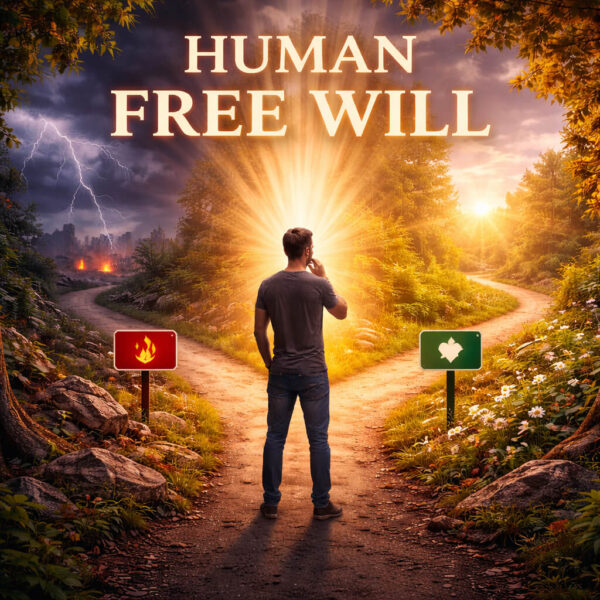
Humans are at the center of the problem of evil.
God didn’t create evil; he made a “very good” creation and we corrupted it.
After all, if we weren’t sinners, we wouldn’t need a savior.
But because we do have free will, we have the freedom to choose to do good, or to perpetuate evil.
A world with real freedom is better than a world full of robots. If people only do good because they’re programmed to, that goodness doesn’t mean much.
It’s automatic. Not chosen.
The Logic of Choice
For love to be real, it has to be voluntary. You can’t force someone to love you. If it’s forced, it isn’t love at all. It’s just a response.
So if God wanted real relationships—ones built on trust, sacrifice, and love—He had to give us the ability to choose.
And that includes the ability to choose badly.
Why Doesn’t God Intervene?
This is usually the next logical question when someone is presented with the free will argument.
If God so loves us, why doesn’t he step in and intervene? Like a parent who stops a child from darting across the road or reaching for the handles jutting out from a knife block.
The argument goes like this:
If God constantly stepped in to erase the consequences of our actions, free will wouldn’t actually exist.
Cause and effect would collapse, choices wouldn’t matter, and morality would lose its weight.
In this framework:
- Moral evil—things like war, cruelty, and injustice—flows from human freedom, not divine intent.
- The cost of freedom is that people can turn away from what is good.
Evil, then, isn’t something God created. It’s the absence of good—like cold is the absence of heat.
It shows up when humans turn away from the light.
Key takeaway
God didn’t create evil itself.
He created the possibility of evil so that real love—chosen, costly, and meaningful—could exist at all.
Natural Evil vs. Moral Evil

Free will helps explain why so much evil exists in the world between and amongst mankind.
But what about the evil, destruction, and brokenness that occurs without human intent?
Things such as diseases, natural disasters, and genetic abnormalities.
How do we explain the existence of these evil and soul-crushing phenomena in the presence of a loving God?
Two Kinds of Brokenness
One way to start is by making a simple distinction.
Moral evil comes from human choices. Things like theft, war, and betrayal.
Natural evil comes from the world itself. Things like cancer, hurricanes, and wildfires.
A World That Feels Broken
Interestingly, though, the Bible tells us “the whole creation groans” because of what man’s sin has subjected it to. So in a way, even the “natural evil” is man-caused.
This isn’t how things were meant to be.
Rather, they are a symptom of a world that’s out of sync with its original design.
Not a world being punished. A world that’s unfinished.
Storms aren’t sent by God to teach lessons. They’re the result of a creation that’s fractured and waiting for restoration.
A Shift in Perspective
Is it possible that God isn’t actively sending punishments in the form of natural disasters and terminal diseases? But instead, he allows these things to happen because he grants free will and we are living with the consequences of our own choices?
I think it’s more than possible. I think it’s likely.
Whether or not God allows these evil things to occur for character building and growth, I don’t know. But I will say that the effect of such things does indeed foster and encourage dependence on Him and cooperation with one another.
The Perspective of Infinity

Still not convinced?
Sometimes there are things so perplexing that make you wonder how they can fit into God’s plan. Trying to logically connect the dots is a major challenge.
But this is where we need to understand the difference between the God of the universe and His creation.
If we acknowledge that God exists — which is a prerequisite to reading a post about why a loving God would allow evil and suffering — we must understand one very distinct fact.
God must be infinitely bigger, more powerful, and certainly more understanding than we ever will be.
Seriously, think about it:
If He created everything, including us, then by pure definition and logic, the Creator knows more than the creation does — or ever will.
The Parent and the Child
Think about a toddler getting a life-saving vaccine.
From the child’s point of view, it feels like betrayal. They’re being held down. They’re in pain. They’re looking at you and wondering why you’re allowing this “torture” to happen.
None of it makes sense to them.
They don’t understand disease or biology or long-term health.
Now scale that gap up.
If God is infinite, the distance between His understanding and ours is far greater than the distance between a parent and a child.
We see a single moment. He sees the whole story.
We see today’s tragedy. He sees eternity.
The Ripple Effects We Can’t See
There’s a concept in the chaos theory called the Butterfly Effect. A small action in one place can trigger massive consequences somewhere else.
The same may be true of suffering.
- Could a personal loss today shape a strength that saves someone years from now?
- Could a natural disaster spark compassion that changes the course of history?
We can’t know for sure. And certainly God doesn’t micromanage or “pull the strings” of each and every action that occurs, lest we become puppets and not creatures of free will.
These small events don’t make the pain disappear. But it does remind us that we’re working with incomplete information.
As Isaiah 55:8-9 says: “For my thoughts are not your thoughts, neither are your ways my ways,” declares the Lord. “As the heavens are higher than the earth, so are my ways higher than your ways and my thoughts than your thoughts.”
Trusting the Character, Not the Circumstance
When we can’t detect God’s hands and can’t understand his mind, the invitation is to trust His heart.
It puts the focus on our relationship with God.
Instead of asking only, “Why is this happening?”, we now also ask, “Who is with me in this?”
To put it another way: the relationship goes from a doctor delivering a bad diagnosis, to a loved one holding your hand through the ordeal.
The Takeaway
Recognizing the “perspective of infinity” isn’t a way to dodge hard questions. It’s an honest admission that a finite mind can’t fully measure an infinite plan.
God’s Presence in Suffering

At a certain point, the arguments stop helping. While I personally have not undergone any prolonged sense of suffering or despair, I can only imagine the struggle that comes from hardship.
When you’re in the middle of the storm, you don’t need a theory. You need shelter.
That’s where the focus shifts from why evil exists to how to respond to it.
The God Who Suffers With Us
In Christianity, we know that God isn’t distant.
He’s not a watchmaker who set the world in motion and walked away.
He’s a fellow-sufferer.
God entered human history in the person of Jesus and suffered and died for our sins. He experienced the worst of human evil.
Betrayal. Injustice. Violence. Death.
That means we don’t worship a God who is untouched by pain. We worship one who knows it from the inside.
Presence Beats Explanation
Raise your hand if you’ve ever been guilty of trying to “fix” someone’s sorrow by explaining the reasoning behind it.
Mine’s up.
When someone is suffering, our instinct is to explain it. To give a reason. To make it make sense.
But most of the time, that’s not what helps.
The most God-like thing we can do is show up… and then stay.
- The “with-ness” of God: For many people, comfort doesn’t come from an answer to “Why?” It comes from hearing, “You’re not alone.”
- The role of community: Often, God’s response to suffering looks like people. A neighbor bringing a meal. A stranger offering help after a storm. A friend who listens without trying to fix anything.
That is “good” pushing back against “evil” in real time.
When Pain Isn’t the End
There’s a big difference between saying, God caused this and God can use this. The presence of God in suffering means pain is never meaningless.
Never wasted.
He takes what’s broken and does something redemptive with it. Not by calling evil “good.” But by refusing to let evil have the final word.
A Final Thought
Interestingly, sometimes the strongest argument for God has nothing to do with philosophy or science. Instead, it’s the powerful act of unity and “oneness” that comes from people uniting in trying times.
There is little more that gets me choked up than seeing people of different political stripes or persuasions who might have petty differences but who can put those aside and rally together after tragedy or great suffering.
Conclusion: Living with the Mystery
We may never get a single, perfect answer.
Not one explanation that ties up every loose end behind every tragedy.
The problem of evil has been around for as long as humans have been asking questions.
Every generation has had to wrestle with it.
And it’s okay to admit that some of the answers feel thin when you get high enough up the mountain.
Faith in the Tension
Living with mystery doesn’t mean giving up on questions.
It means learning to live with tension.
Two things can be true at the same time:
- The world is undeniably broken.
- The Creator is undeniably good.
We see that tension everywhere. In flowers pushing through cracked sidewalks. In helpers rushing in after disaster.
We may not be able to explain away the darkness. But we can still carry light within it.
Becoming Part of the Answer
Maybe the most powerful response to the question, “Why does God allow evil?” isn’t an explanation at all.
It’s a shift in perspective.
That frustration we feel toward suffering? That deep sense that things should be better? Many believe that sense of justice was placed in us by God Himself.
So instead of waiting for a divine answer, we’re invited to participate in a divine response.
We can:
- Be the comfort. Offer the empathy we wish existed.
- Fight injustice. Use our freedom to push back against moral evil.
- Cultivate hope. Remind others that evil may be present, but it isn’t the end.
Evil challenges faith; there’s no denying that.
But the presence of goodness, sacrifice, and love in a broken world may be the strongest sign of all—that something, or Someone, extraordinary is still at work.
